Going solar is one of the bigger financial decisions a homeowner can make. And in Lake County, where wildfires, outages, and rising utility costs are regular facts of life, it’s a decision more people are taking seriously every year.
The problem is that not every path to solar is created equal. The financing structure you choose, whether that’s a lease, a power purchase agreement (PPA, a contract to buy the electricity a solar system produces at a negotiated per-kilowatt-hour rate), a loan, or a cash purchase, shapes everything from your monthly costs and long-term savings to what happens when your system needs service 10 years from now.
Specifically, it affects:
- Who owns the system and who is responsible when something breaks
- Whether you qualify for the federal solar tax credit and state incentives
- What happens to your contract if the solar company closes
- How the deal looks when you eventually sell your home
This guide breaks down each option clearly and gives you the specific questions worth asking before you sign anything.
The Three Ways to Go Solar
Buying Solar Outright
A cash purchase gives you full ownership of your solar system from day one. You pay the full installation cost upfront, you own every panel and every component, and you keep all the financial benefits, including the federal solar Investment Tax Credit (ITC), state incentives, and net metering credits from your utility (a billing arrangement where your utility credits you for excess power your system sends back to the grid).
The upfront cost is higher, but the return over time is typically the strongest of any financing option. There are no monthly payments, no escalating fees, and no contract terms tying you to a third party. When the system is yours, you decide who services it.
Financing a Solar Purchase With a Loan
A solar loan lets you own the system without a full upfront payment. You finance the purchase, make monthly payments like any other home improvement loan, and still hold ownership of the system. This means you’re eligible for tax credits and incentives, and once the loan is paid off, your ongoing energy costs drop dramatically compared to a standard utility bill.
Loan terms and interest rates vary, and it’s worth comparing options carefully. But from a long-term value standpoint, a loan purchase typically outperforms a lease or PPA because ownership stays with you throughout.
Solar Leases and Power Purchase Agreements
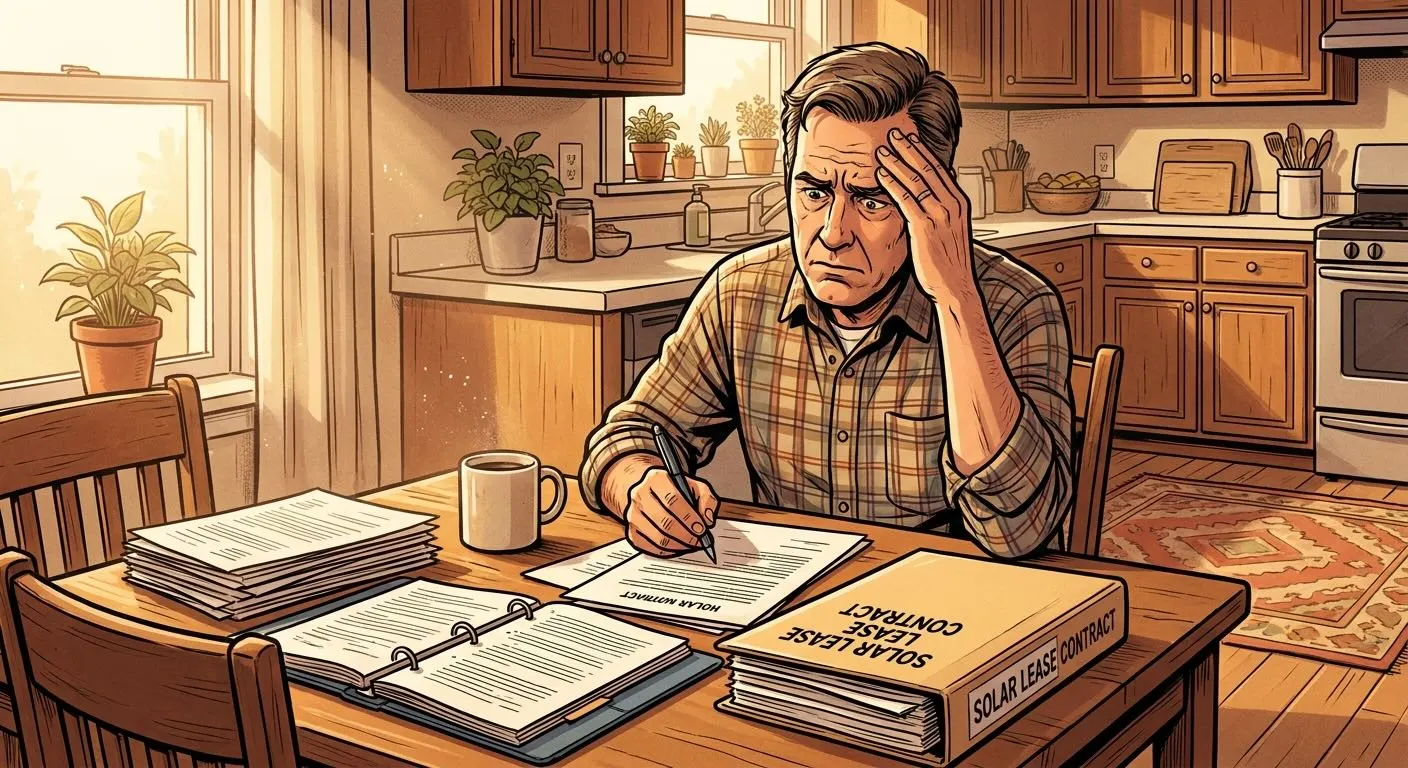
A solar lease and a PPA are similar in one key way: in both cases, a third-party company owns your solar system, not you.
With a lease, you pay a fixed monthly fee to use the system installed on your roof. With a PPA, you pay for the electricity the system generates at a per-kilowatt-hour rate negotiated at signing. In theory, both options lower your monthly energy bill without requiring a large upfront investment. In practice, they come with contract terms and long-term risks that deserve careful attention.
The Hidden Risks of Solar Leases and PPAs
Escalator Clauses and Rising Payments
Many solar lease and PPA contracts include an escalator clause, meaning your monthly payment increases by a set percentage each year, typically between 1% and 3%. Over a 20 to 25-year contract, this can result in payments that are significantly higher than what you saw at signing. For example, a $150 monthly lease payment with a 2.9% annual escalator becomes roughly $220 per month by year 15, and over $290 by year 25.
Before committing, ask what the escalation rate is and calculate what your payment will look like in years 10, 15, and 20. The numbers may surprise you, and that surprise becomes much harder to deal with once you’ve signed. The U.S. Department of Energy’s guide to solar explains how these terms vary across contract types.
What Happens If the Solar Company Goes Out of Business
This is one of the most pressing questions Lake County homeowners should be asking right now, and for good reason. The solar industry has seen a significant wave of company closures and bankruptcies in recent years, including names that once seemed established and reputable. When those companies disappeared, they left behind thousands of customers with leased systems and nobody to call for service, warranty resolution, or monitoring support.
When a solar lease company goes out of business, the situation gets complicated quickly.
Lease contracts are often sold as assets to companies you never agreed to work with. Your options may be limited depending on the specific terms you signed. And if the system underperforms or needs repair, getting resolution can become a lengthy, frustrating process with no clear owner of the problem.
Homeowners stuck with a system from a company that no longer exists are dealing with what’s known as an orphaned solar system. It’s more common across California than most people realize.
If your system has been left behind by a company that’s no longer operating, Jonas Energy Solutions can assess what you have and help you get it producing reliably again. Their team has worked through these situations with Lake County homeowners before, and they know what to look for.
Selling Your Home With a Leased Solar System
If you decide to sell your home and have a leased system on the roof, the buyer typically needs to either assume your lease contract or you’ll need to pay a buyout fee to end it. Some buyers are hesitant to take on a long-term solar obligation, especially if significant payment obligations remain. This can slow or complicate a home sale in ways that simply don’t apply to an owned system.
With an owned solar system, your home’s appraised value may actually increase, and there’s no encumbrance for the buyer to navigate.
Questions to Ask Before Signing a Solar Lease or PPA
Leases and PPAs aren’t automatically bad choices for every homeowner. In some circumstances, particularly for those who can’t access favorable loan terms or aren’t ready for a purchase, they may represent a reasonable starting point. But you should go in knowing exactly what you’re agreeing to.
Here are the questions worth asking any solar company before you sign:
- Who owns the system, and who is responsible for repairs and maintenance throughout the contract term?
- What is the annual escalation rate on my payments, and what will my payment be in year 15 or 20?
- What are the buyout terms if I want to purchase the system outright later?
- What happens to my contract if your company is sold, acquired, or goes out of business?
- How long has your company been operating in this region, and how do you support customers long after installation?
That last question is one that national solar sales representatives often can’t answer clearly. For homeowners in Lake County, it’s one of the most important.
Why Local Long-Term Service Matters More Than You Think
The Short-Term Provider Problem
A significant number of solar companies that have closed in recent years operated on a model built around fast installs and long-term contracts rather than genuine service relationships. They were strong at customer acquisition. The follow-through, years or decades later when something needed attention, was a different story.
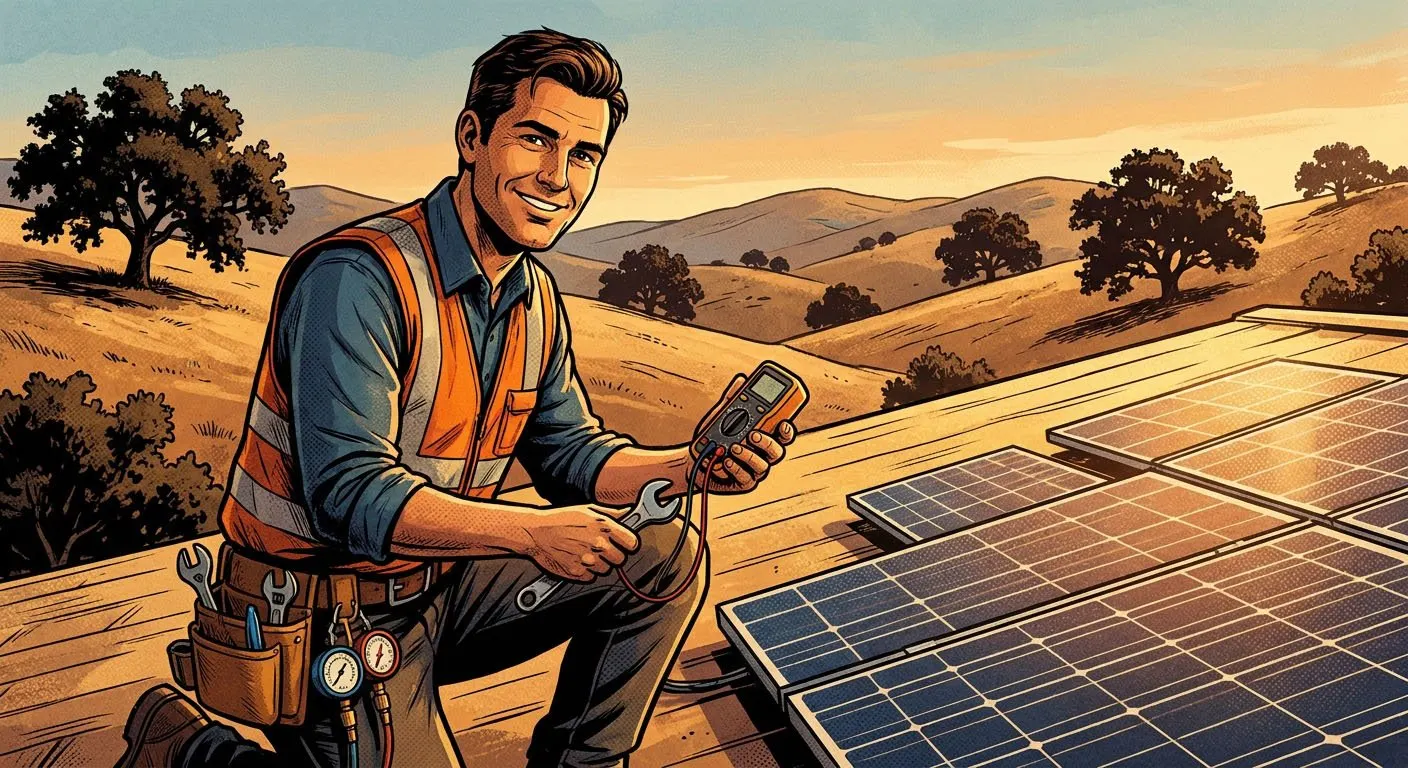
Lake County homeowners and families across California have found themselves with systems that stopped performing correctly, monitoring portals that went dark, and warranty claims with no company on the other end. The financial and logistical burden of resolving these situations often falls entirely on the homeowner. If you’re already in that situation, Jonas Energy Solutions offers solar repair and service in Lake County and can help evaluate what you’re working with.
Jonas Has Been Here Since 2000
Jonas Energy Solutions has been installing and servicing solar systems in Lake County since 2000. That’s over two decades of work in this specific community, with the same homeowners, the same conditions, and the same commitment to doing the job right.
“You know us, you trust us, and we can stand behind what we do.” That’s not a tagline; it reflects a real operating principle. Many of Jonas’s current customers are people they first installed for years or even decades ago, now calling back for a system upgrade, a battery backup addition, or help troubleshooting a panel. It also means Jonas has working knowledge of what Lake County homes actually need, including:
- How wildfire risk and outage patterns affect backup power decisions
- Which roof types and orientations work best for solar in this region
- How local utility dynamics and net metering affect system sizing
- When a ground-mounted system makes more sense than a rooftop install
That kind of regional, hands-on experience takes years to build. It’s not something a company that showed up last year can replicate.
How Jonas Energy Solutions Approaches Solar in Lake County
Honest Assessments Before Any Commitment
Not every roof is the right fit for solar, and not every homeowner’s financial situation points to the same solution. Jonas offers straightforward assessments before recommending any system, including guidance on whether a rooftop installation is appropriate or whether a ground-mounted configuration would better serve the property.
This no-pressure approach is a consistent part of how Jonas has built its reputation across Lake County over more than 25 years.
If you’re exploring solar for the first time or reconsidering an earlier decision, their team can walk you through current financing options and help you understand what ownership would actually look like for your home and usage.
Solar Monitoring and Long-Term Support
Owning a solar system is not a set-it-and-forget-it investment.
Systems benefit from ongoing monitoring to confirm they’re producing as expected, and they need a reliable service partner when issues arise. Jonas provides long-term support for the systems they install, with local technicians who can respond when something needs attention.
For Lake County homeowners who want a partner invested in the performance of their system over decades, not just during the sales process, that long-term relationship is worth factoring into any financing decision.
Ready to Go Solar in Lake County the Right Way
Whether you’re starting from scratch or trying to make sense of an existing lease, an orphaned system, or a financing offer that feels complicated, the best first step is a direct conversation with someone who knows what they’re talking about and has a track record in your community.
Call or contact Jonas Energy Solutions to schedule a no-pressure solar consultation and get honest guidance on your options before signing anything. After more than 25 years serving Lake County homes, they have both the experience and the long-term accountability to help you make the right decision.