Solar is supposed to lower your energy bill, not raise questions about it. But solar panels not producing at expected levels is more common than most homeowners realize. For many in Lake County and surrounding areas, a subtle drop in output, a creeping PG&E bill, or a confusing alert in your monitoring app is the first sign that something is off.
The hard part is knowing what "off" actually means. Is it a dirty panel, a shading problem, a failing inverter, or something more serious? And does it need attention right now, or is it a normal fluctuation you can ignore?
This article walks you through 9 concrete warning signs that your solar system is underperforming, what typically causes each one, and what your next step should be. Here is a quick overview before we dig in:
- Your electric bill has crept back up
- Your solar panels are producing less than your monitoring app expects
- Your inverter is showing error lights or codes
- Your solar panels haven't been cleaned or serviced in several years
- New shading has appeared since installation
- Your solar panels or inverter are more than 10 years old
- You have no idea what your solar panels are currently producing
- Your solar panels have visible physical damage
- Your solar panels stopped producing or tripped a breaker
One important thing to know upfront: Jonas Energy Solutions services orphaned solar systems, meaning systems that were installed by a company that has since closed, moved on, or stopped supporting residential clients in this area. If that describes your situation, you are not out of options.
Your Electric Bill Has Crept Back Up
This is usually the first thing homeowners notice, and it is often dismissed as a rate increase or seasonal change. Sometimes that is true. But if your PG&E bill has been climbing steadily for several months with no major change in your energy use, your solar panels may not be producing enough to offset your usage.
What to Look For
Pull up your last 6 to 12 months of PG&E statements and compare your net usage month over month. If your solar system is producing roughly what it was before, your bill should track similarly to prior years. A consistent upward trend in net energy charges without a clear explanation is worth investigating.
What Can Cause It
Gradual production drops are often caused by panel degradation over time, shading from tree growth, soiling buildup, or an inverter that is starting to underperform. None of these problems announce themselves loudly, which is why the electric bill is often the only indicator homeowners catch.
Your Solar Panels Are Producing Less Than Your Monitoring App Expects
Most solar systems installed in the last decade include some form of monitoring, whether through a manufacturer app, a web portal, or a display on the inverter itself. If yours is active and you know how to read it, this is one of the most direct ways to spot a problem early.
A consistent gap between expected and actual production is a clear signal your solar panels are not producing what they should. Expected production varies by season, weather, and your specific system size, but your monitoring history should show a recognizable pattern. Sudden drops or flat lines that do not match cloudy weather are a red flag.
When Monitoring Goes Silent
If your monitoring app has not updated in days or weeks and you know your system is still on, that is a problem in itself. Communication failures can mean a device has lost connection or, in some cases, that a component has failed entirely. Do not assume silence means everything is fine.
Your Inverter Is Showing Error Lights or Codes
The inverter is the brain of your solar system. It converts DC power from your panels into usable AC power for your home. When something goes wrong, most inverters display it through indicator lights, error codes, or an audible alert.
If your inverter is showing anything other than a steady green or "normal" status light, treat it as an active signal to investigate. Even intermittent errors that seem to clear on their own can indicate early-stage component failure or an underlying issue that will worsen over time.
What the Codes Mean
Error codes vary by manufacturer, but common categories include grid faults (the inverter has lost its connection to the grid or utility), isolation faults (a potential wiring or grounding issue), and over-temperature warnings. A qualified solar technician can read these codes and tell you exactly what is happening. Attempting to reset the inverter repeatedly without diagnosing the root cause can sometimes mask a more serious problem.
Your Solar Panels Haven't Been Cleaned or Serviced in Several Years
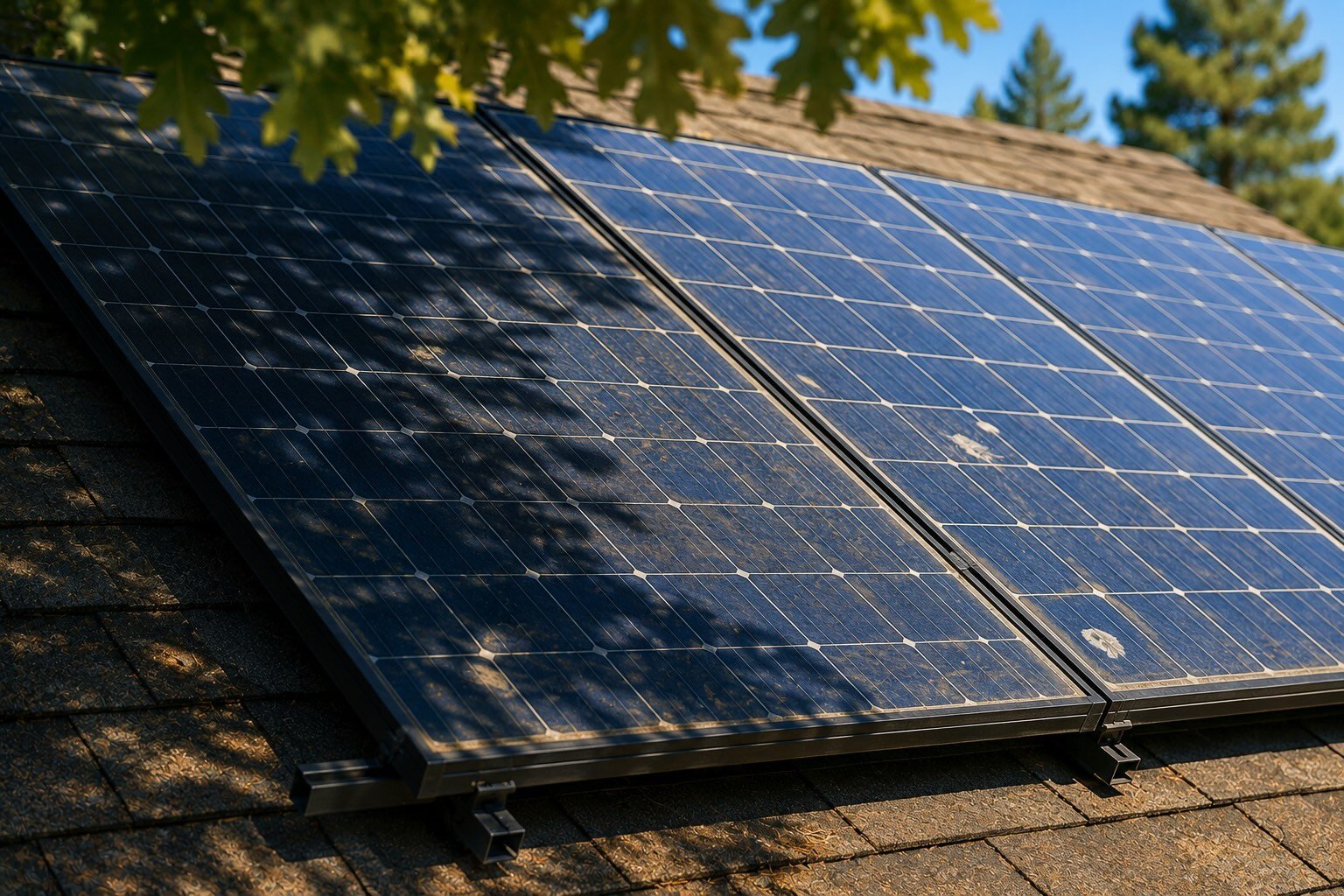
Solar systems are often described as low maintenance, and compared to most home mechanical systems, they are. But "low maintenance" does not mean "no maintenance." Panels accumulate dust, pollen, bird droppings, and other debris over time, all of which reduce the amount of sunlight reaching the solar cells.
How Much Does Soiling Matter?
In areas like Lake County, where dry summers bring significant dust and wildfire smoke, panel soiling can be more pronounced than in coastal climates. According to a 2023 report from the International Energy Agency's Photovoltaic Power Systems Programme, soiling is the single most influential factor impacting solar system yield after irradiance, and is estimated to cause a 3 to 5% loss in annual energy production globally, with significantly higher losses in dry, dusty climates like Northern California.
Beyond cleaning, a routine inspection typically covers:
- Panel surface condition (soiling, cracks, delamination)
- Wiring connections and junction box integrity
- Mounting hardware and roof penetration seals
- Inverter performance and error log review
- Shading analysis based on current tree and structure positions
All of these matter for both performance and long-term safety.
New Shading Has Appeared Since Installation
Shading is one of the most underappreciated causes of solar underperformance. Trees grow. New structures go up. Neighboring landscaping changes. If something is now casting a shadow on even a portion of your panels during peak sun hours, your production can drop more than you would expect.
Why a Small Shadow Has a Big Impact
Most traditional solar panels are wired in series, meaning that if one panel in a string is shaded and producing less power, it can drag down the output of the entire string. Newer systems with microinverters or DC optimizers handle shading better, but no system is completely immune.
Walk your property on a sunny midday and look at your roofline carefully. If branches, a new fence, or a neighboring structure is now throwing shade on any panel, your solar panels are not producing at full capacity during peak hours, and that is worth evaluating.
Your Solar Panels or Inverter Are More Than 10 Years Old
Modern solar panels are built to last 25 to 30 years, but other components in your system have shorter lifespans. Inverters, particularly traditional string inverters, typically carry warranties of 10 to 12 years and may begin showing signs of degradation or failure after that point. Wiring connections, combiner boxes, and breaker components are also subject to wear over time.
If your system is over a decade old and you have not had it inspected recently, a professional evaluation is worth scheduling. This is especially true if your installer is no longer in business. Jonas services orphaned solar systems throughout Lake County and can give you an honest assessment of where your system stands and what, if anything, needs attention.
You Have No Idea What Your Solar Panels Are Currently Producing
This one is more common than most homeowners want to admit. Life gets busy. The monitoring app gets ignored. The inverter display is in the garage and no one checks it. Years go by and the assumption is that everything is fine because no one has complained.
If you genuinely do not know whether your solar panels are producing what they should right now, that is a gap worth closing. Getting a baseline reading is the first step toward knowing whether you have a problem at all. A solar technician can pull a production history from your inverter data and compare it against the expected output for your system size and location.
Your Solar Panels Have Visible Physical Damage
Storm damage, hail, falling branches, and wildlife can all cause physical damage to solar panels or mounting hardware. Cracks in the tempered glass, broken frames, or panels that have visibly shifted from their original position are all signs that need professional attention, both for performance and for safety.
What to Do If You Spot Damage
Do not attempt to inspect or repair solar panels yourself. Even a system that appears to be off can carry live DC voltage from the panels in daylight. Contact a licensed solar technician to assess the damage and determine whether panels need to be replaced or whether the rest of the system is still operating safely. The Jonas solar services page covers what to expect from an evaluation visit.
Your Solar Panels Stopped Producing or Tripped a Breaker
A solar system that has stopped producing entirely is the most obvious sign of a problem, but it is also sometimes the easiest to overlook. If your monitoring app goes dark and you assume it is a connectivity issue, weeks can pass before anyone realizes the system has actually shut down.
If your system has stopped producing and a breaker check or simple inverter reset does not bring it back, call a licensed solar technician. Do not attempt to reset electrical components you are not familiar with, especially if you notice any burning smell, unusual sounds near the inverter, or discoloration around any wiring or disconnect.
When to Start With the Quick Checks, and When to Call Jonas
Not every warning sign on this list means you have an urgent problem. Here is a simple way to think about next steps:
- 1 to 2 signs apply: Start with the basics. Check your monitoring app, look at your panels from the ground for obvious debris or shading, and compare your last few electric bills to the same period last year. If the issue is not obvious, a professional inspection is still worth scheduling.
- 3 or more signs apply: Do not wait. The longer a performance problem goes unaddressed, the more production you lose and, in some cases, the more expensive the eventual repair becomes.
- Inverter error, visible damage, or system is completely off: These are not "watch and wait" situations. Contact Jonas to schedule a solar system evaluation.
Jonas Energy Solutions serves homeowners throughout Lake County, CA and surrounding areas. If your original installer is no longer around, or if you have simply never had your system professionally evaluated, we can step in. We service orphaned solar systems and give you a straightforward picture of what you have and what it will take to get it performing the way it should.
If you have home battery storage or are considering adding it as a next step once production is healthy again, that is also part of what we do. And if timing or repair costs are a concern, financing options are available.
Call us at (707) 994-5911 or reach out through our contact page to schedule a solar system evaluation.