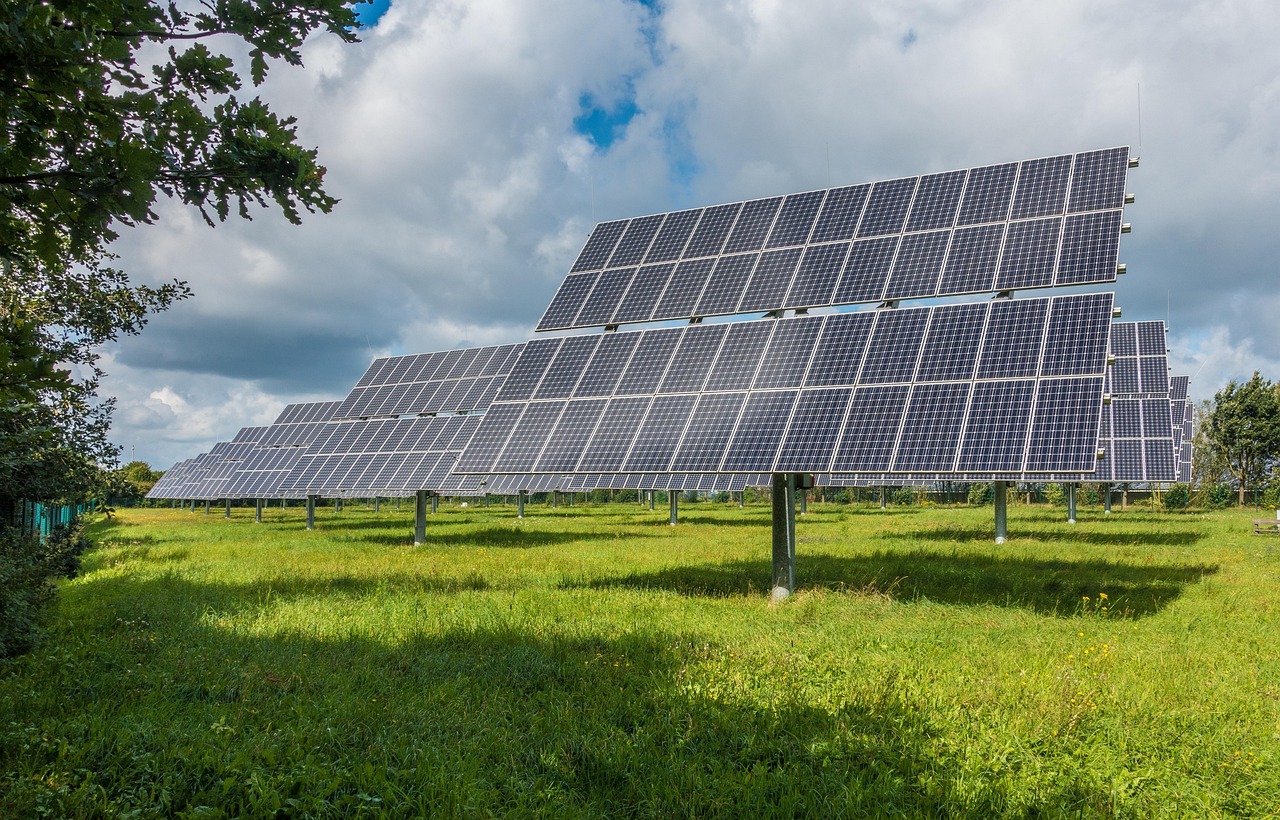

If you opened your PG&E bill this July and felt a jolt, you are not alone. Electricity costs in El Dorado County are among the highest in Northern California, and summer is when the gap between what you pay and what feels reasonable grows the widest. For homeowners in Placerville, Cameron Park, El Dorado Hills, and the surrounding foothills, solar installation has become one of the most practical ways to bring those costs back under control.
There is a lot of noise about solar right now, especially with California’s NEM 3.0 policy changes still confusing for many homeowners. This article cuts through that confusion and focuses on what actually matters for El Dorado County homeowners: what your bill is made of, what solar can and cannot do for it, and what a real local installation looks like.
Why Placerville and El Dorado County Homeowners Pay So Much for Power

How PG&E Rates Have Changed in El Dorado County
PG&E electricity rates have increased sharply over the past several years. According to PG&E’s own published rate data, the average residential rate reached 44.66 cents per kilowatt-hour as of October 2024, placing it among the highest utility rates in the continental United States. The California Public Utilities Commission has documented the sustained upward trend in PG&E rates, driven by wildfire mitigation costs, grid infrastructure investment, and transmission charges.
Starting in March 2026, PG&E also implemented a new Base Services Charge of approximately $24 per month for most residential customers. This is a fixed infrastructure fee separate from your usage charges, meaning your bill now has a floor even in months when you use relatively little electricity.
What Time-of-Use Pricing Means for Your Summer Bill
Most PG&E residential customers are now on a time-of-use (TOU) rate plan. Under the standard TOU structure, electricity is priced higher from 4 to 9 p.m. every day. In summer, that window aligns almost exactly with the hours when El Dorado County homes are working hardest to cool down after a hot afternoon, which is also when your air conditioner draws the most power.
Running your AC at peak hours on a TOU plan costs significantly more per kilowatt-hour than running it midday. This is one reason summer bills in the foothills can feel disproportionately high even when you feel like you have been careful about usage.
Is Solar Still Worth It in El Dorado County Under NEM 3.0
What Changed Under NEM 3.0
California’s NEM 3.0 policy, which took effect in April 2023, reduced the compensation rate for electricity that solar customers export to the grid by roughly 75% compared to the previous NEM 2.0 program. In March 2026, California courts upheld NEM 3.0, confirming it as the current framework for new solar customers.
This has caused understandable hesitation. If you are exporting power to the grid and earning much less credit for it, does solar still make financial sense?
Why Solar Still Makes Financial Sense in 2026
The answer depends on how you use your solar energy. Every kilowatt-hour you generate and consume directly in your home is a kilowatt-hour you do not buy from PG&E. At PG&E’s current residential rates for El Dorado County, that direct self-consumption is where the savings come from under NEM 3.0. Exporting surplus to the grid is no longer where the value lies.
Several factors make solar particularly strong for El Dorado County homeowners right now:
- High local electricity rates mean each self-consumed kilowatt-hour is worth more in savings than in most other states
- Long, sunny summers in the foothills produce consistent solar output for the months when your bills are highest
- The federal Residential Clean Energy Credit currently covers 30% of installation costs
- Utility rates are expected to continue rising, which increases the long-term value of locking in your own production today
A mid-sized system that offsets just half of a typical El Dorado County summer bill can still represent several hundred dollars in savings over those peak months. For homes with significant daytime electricity use (running appliances, working from home, or pre-cooling before peak hours), a solar system can offset a meaningful portion of summer costs even without battery storage.
How Battery Storage Changes the Equation
Pairing solar with a home battery allows you to store the energy your panels generate during the day and use it during PG&E’s peak pricing window from 4 to 9 p.m., rather than buying expensive grid electricity at that time. Research from Enel North America found that under NEM 3.0, storage provides a higher percentage of total system value than under NEM 2.0, a direct result of the shift toward self-consumption economics.
For El Dorado County homeowners who run AC heavily in the evenings and want to minimize peak-hour charges, a solar-plus-storage system is typically the configuration that delivers the strongest long-term return. Jonas Energy Solutions can walk you through whether adding battery storage makes sense for your home’s evening usage patterns and peak-hour exposure.
What Drives High Summer Electricity Use in the El Dorado Foothills
Heat, Elevation, and Cooling Load in Placerville Homes
Placerville and the surrounding foothills sit at elevations ranging from roughly 1,800 feet near Placerville to over 3,000 feet in communities like Pollock Pines. The foothill climate brings hot, dry summers with daytime temperatures regularly reaching the 90s and above, combined with cooler nights that drop off more sharply than lower-elevation valley areas.
This temperature range creates a specific challenge: homes here need serious cooling capacity during the day but have enough overnight recovery to make high-efficiency systems worthwhile. The same climate characteristics that make El Dorado County beautiful in spring and fall are what drive significant air conditioning load from June through September.
Older homes in Placerville and Diamond Springs, many built before modern energy codes, often have limited attic insulation and single-pane windows that increase the cooling load further. These are the homes where a well-sized solar system has the most opportunity to offset real costs.
How Solar Offsets Peak AC Demand
Solar panels produce their most power between roughly 10 a.m. and 3 p.m. on a clear day, overlapping with the buildup of heat load in a foothill home before afternoon temperatures peak. A properly sized system can offset a significant portion of your air conditioning’s daytime electricity draw, reducing or eliminating the energy you would otherwise pull from PG&E during those morning and midday hours.
Pre-cooling your home during solar production hours, before PG&E’s 4 p.m. peak pricing begins, is a practical strategy that many El Dorado County homeowners with solar-plus-storage systems use to extend their savings. This is the kind of usage guidance Jonas Energy shares during the installation process, because a system that is well-matched to your home’s cooling schedule performs better than one installed without that context.
What Solar Installation Looks Like for Placerville Homeowners
Roof-Mount and Ground-Mount Options for Foothill Properties
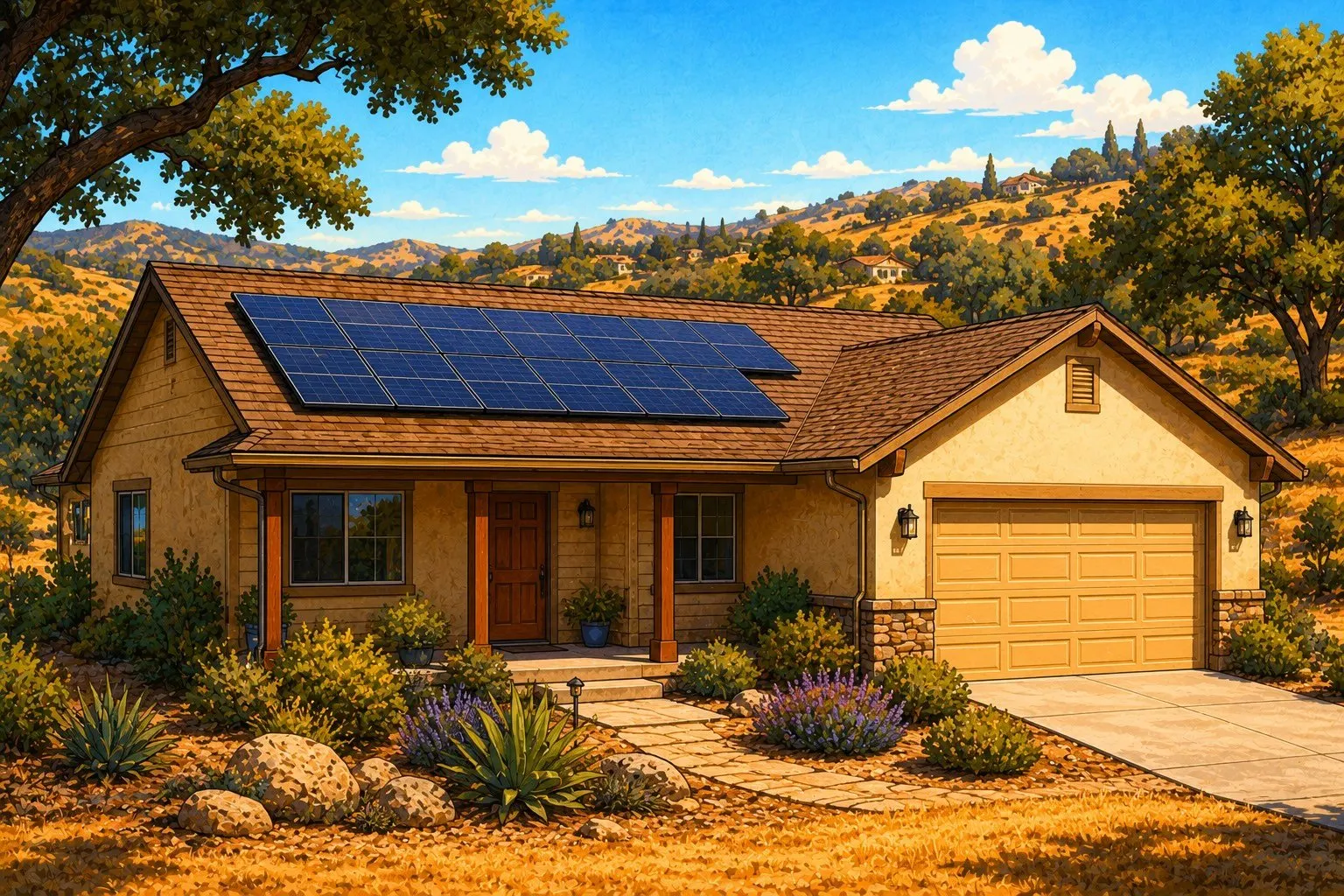
El Dorado County properties vary widely. Some homeowners have large, well-oriented roof surfaces ideal for standard roof-mounted panels. Others have older roofs, significant tree shading from mature oaks and pines, or irregular lot layouts that make a ground-mounted system a better fit.
Jonas Energy Solutions installs both roof-mount and ground-mount solar systems for Placerville and El Dorado County homes. Ground-mount systems are particularly common in the foothills, where larger lot sizes allow for optimal panel positioning that a roof’s pitch or tree coverage might not provide. The right configuration depends on your roof condition, shading, available ground space, energy usage, and long-term goals. All of these factors are evaluated before any system is designed or proposed.
What a Jonas Energy Solar Assessment Covers
A solar assessment from Jonas Energy Solutions covers the specifics of your home and usage, not a one-size-fits-all proposal. The process includes:
- Reviewing your current energy usage and recent PG&E billing history
- Evaluating your roof condition, orientation, and shading from trees or structures
- Assessing ground-mount feasibility on your property if needed
- Sizing system options based on your goals: bill reduction, energy independence, or backup power
- Walking through battery storage options and whether your usage patterns make storage worthwhile
- Reviewing financing options for your situation
The assessment is no-obligation and starts with a conversation about what you are trying to solve. You can review the full range of Jonas Energy’s solar services before you ever pick up the phone.
Making Solar Affordable in El Dorado County
Financing Options for Placerville Homeowners
Jonas Energy Solutions has partnered with Redwood Credit Union to offer solar financing for qualifying homeowners. Spreading installation costs over time means many El Dorado County homeowners can see a positive monthly cash flow from day one, since loan payments often run below what the system saves on PG&E.
Federal Tax Credit and Other Incentives
The federal Residential Clean Energy Credit currently allows homeowners to claim 30% of the cost of a new solar system as a credit against federal income taxes. This applies to both solar panels and battery storage when the battery is charged primarily by solar. Any questions about how the tax credit applies to your specific tax situation should be reviewed with a qualified tax professional.
Why El Dorado County Homeowners Choose Jonas Energy Solutions
Jonas Energy Solutions serves El Dorado County from a local Placerville-area office, with a team that knows foothill home construction, the regional climate, and the specific grid conditions that affect how solar systems perform here. The company has been providing energy services for over 70 years, is a SolArk Certified Installer (SolArk is a leading U.S.-made solar battery manufacturer), and offers solar alongside HVAC, battery storage, and generator services.
That range of services matters when you want a single contractor who can design an integrated home energy system, not just drop panels on a roof and move on. Solar is a 20-to-30-year investment, and the contractor you choose should be one you can reach in year 15 as easily as year one. That kind of long-term relationship is what Jonas Energy has built across Northern California.
Jonas Energy has been serving El Dorado County from a local Placerville-area office for years, which means the team you call today is the same team handling your system a decade from now. When you are ready to find out what solar could realistically do for your bill, getting a free estimate is a straightforward first step or call (530) 621-0503 to learn more.