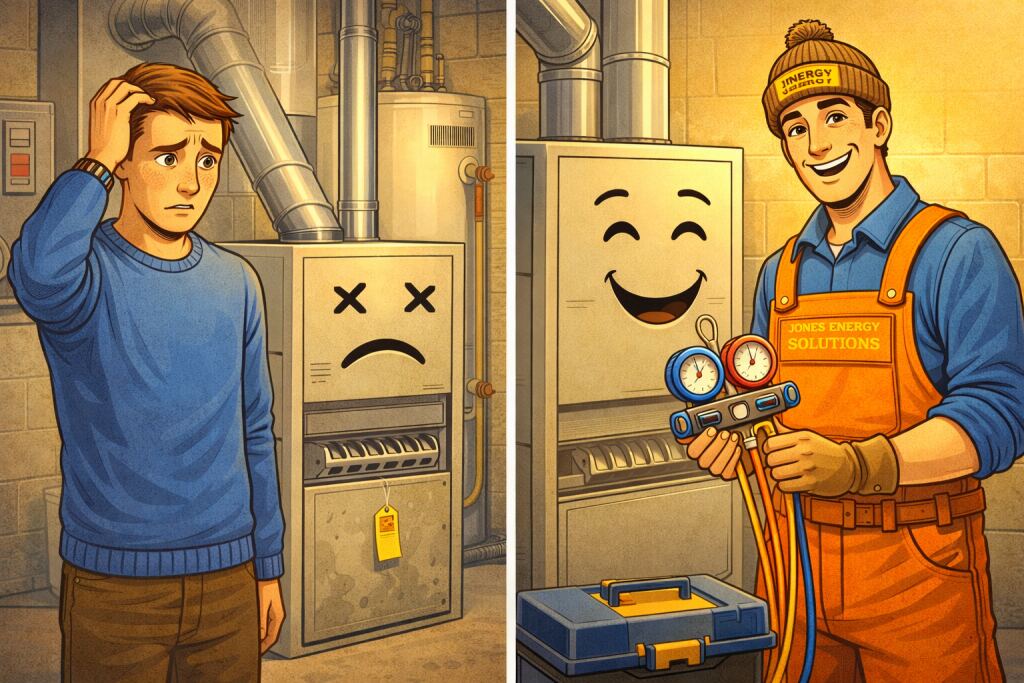
Your heating system starts making a strange noise. Or maybe you notice one room stays colder than the rest. Or perhaps your energy bills have climbed even though you haven’t changed your thermostat settings. These moments create a common dilemma for Lake County homeowners: can you fix this yourself, or do you need to call a professional?
The answer matters more than you might think. Some heating problems respond well to simple DIY solutions. Others require specialized knowledge, tools, and safety precautions that only trained technicians possess. Attempting the wrong repair yourself can make the problem worse, create safety hazards, or void your equipment warranty.
This guide helps you understand the difference. You’ll learn which heating issues you can safely address on your own, and which ones demand professional expertise. More importantly, you’ll understand why certain problems need expert attention, so you can make informed decisions when your heating system acts up.
Simple Fixes Most Homeowners Can Handle
Before calling for professional heating repair, check these common issues that often have simple solutions:
Thermostat Settings and Batteries
Walk to your thermostat and verify it’s set to heat mode. Confirm the temperature setting is higher than the current room temperature. These sound obvious, but family members sometimes adjust settings without telling others. If your thermostat runs on batteries, weak batteries can prevent it from controlling your system properly. Replace them and see if normal operation resumes.
Air Filter Replacement
A clogged filter blocks airflow, reducing your system’s ability to heat your home effectively. It also forces your blower motor to work harder, which increases energy consumption and can trigger safety shutoffs. Check your filter monthly during heating season. If it looks gray or clogged with dust, replace it. This simple maintenance task prevents many heating problems before they start.
Circuit Breaker and Emergency Shutoff Switch
Heating systems have a circuit breaker in your electrical panel and often an emergency shutoff switch near the unit itself. The switch typically looks like a standard light switch and is sometimes accidentally turned off during cleaning or storage access. Check both the breaker and the switch. If the breaker has tripped, reset it once. If it trips again immediately, stop and call for professional service. Repeated tripping indicates an electrical problem that requires expert diagnosis.
Blocked Vents and Registers
Walk through your home and make sure supply vents and return air grilles are not blocked by furniture, curtains, or storage items. Blocked vents restrict airflow, creating uneven heating and forcing your system to run longer cycles. This simple check takes minutes and can resolve comfort issues without any repairs.
Warning Signs That Demand Professional Attention
The following symptoms indicate problems that require professional heating repair. Attempting DIY fixes for these issues can be dangerous or make the problem worse.
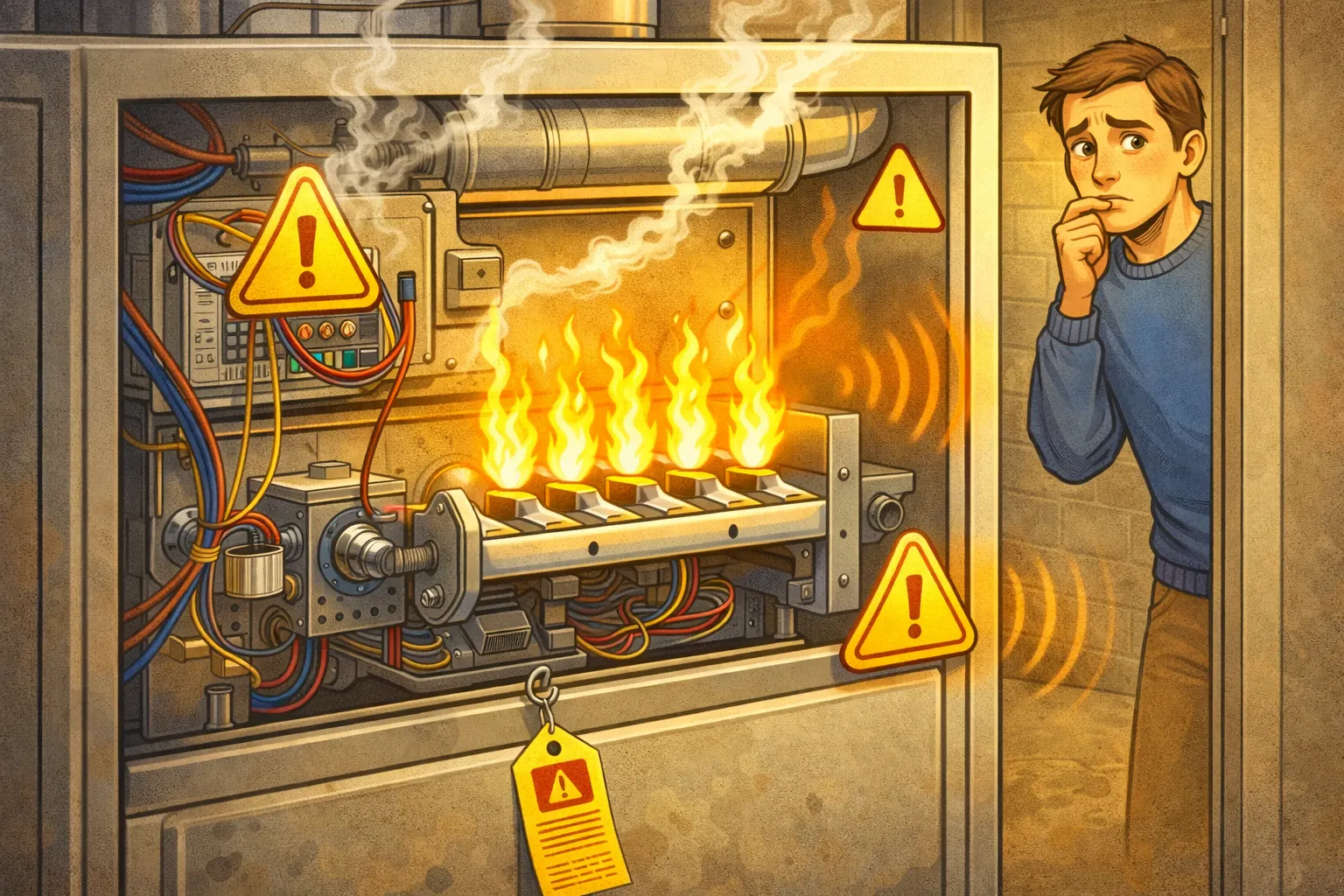
Strange Smells Coming from Your Heating System
Gas or sulfur odors require immediate action. If you smell gas, leave your home immediately without turning any lights or appliances on or off. Once you’re safely outside, call your gas company and 911. After emergency services have addressed the immediate danger, contact Jonas Energy Solutions for a complete system inspection before using your heat again.
Persistent burning smells, beyond the brief dusty odor when you first turn on your heat in fall, can indicate overheating components or electrical problems. Burning plastic or rubber smells are especially concerning. These issues require professional diagnosis because they involve components that handle high temperatures and electrical current.
Unusual Noises That Won’t Go Away
All heating systems make some noise during normal operation. You’ll hear the whoosh of air through ducts, the click of the thermostat, and the hum of the blower motor. But certain sounds indicate mechanical problems developing:
Loud banging or booming sounds when your furnace starts up can indicate delayed ignition. Gas builds up before igniting, creating a small explosion inside the combustion chamber. This is dangerous and can damage your heat exchanger. Professional service is needed to adjust the ignition timing and ensure safe operation.
Squealing or grinding noises typically come from the blower motor or its bearings. These components wear out over time, especially if the system hasn’t received regular maintenance. Continuing to run a system with worn bearings can lead to complete motor failure, which is more expensive to repair than addressing the problem early.
Rattling or vibration sounds might indicate loose components, ductwork issues, or problems with the blower assembly. While these might seem minor, they often signal that parts are not secured properly or that something is out of balance. A technician can identify the source and make corrections before the problem worsens.
Frequent Cycling or System That Won’t Stay On
Your heating system should run in relatively even cycles, turning on when the temperature drops below your setpoint and running until the house reaches the desired temperature. If your system cycles on and off every few minutes, or if it won’t stay on long enough to heat your home, something is wrong.
Short cycling can result from a failing thermostat, oversized equipment, blocked airflow, or problems with the flame sensor or limit switch. These components interact in complex ways, and proper diagnosis requires knowledge of how heating systems operate. Guessing at the problem and replacing parts randomly often wastes money without solving the issue.
Carbon Monoxide Detector Alarms
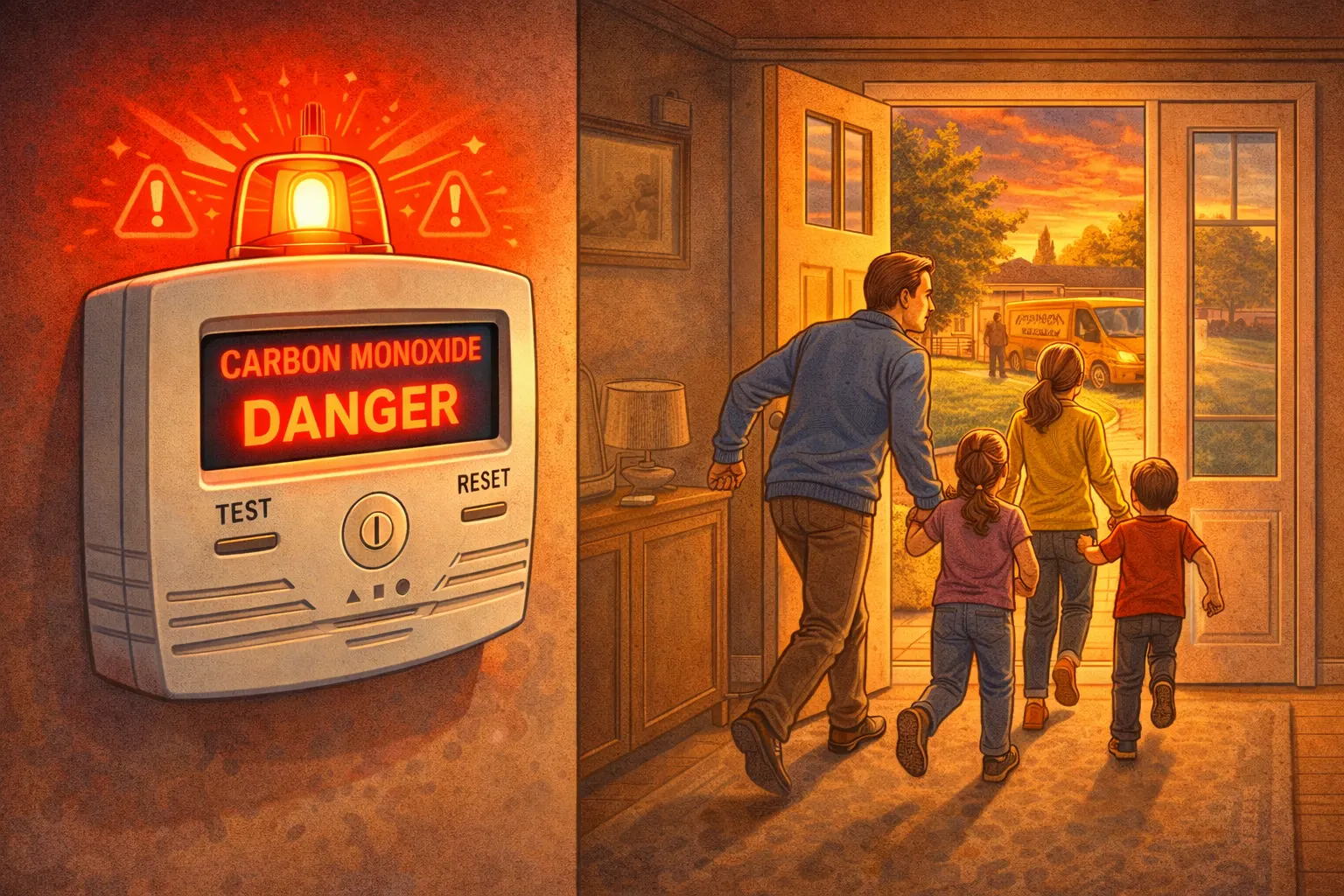
Never ignore a carbon monoxide alarm. Evacuate your home immediately and call emergency services. Carbon monoxide is odorless and invisible, but deadly. Your detector exists to warn you of this danger, and you must take every alarm seriously.
After the immediate emergency has been addressed, your heating system needs a complete professional inspection before you use it again. Common sources of carbon monoxide in heating systems include cracked heat exchangers, blocked vents, damaged flue pipes, and combustion problems. These issues require specialized tools and training to diagnose and repair safely.
Uneven Heating or Cold Spots That Persist
One cold room might result from a closed vent or poor insulation. But if you’ve checked the obvious causes and the problem continues, or if multiple areas of your home won’t heat properly, the issue likely involves your ductwork, air handler, or system capacity. These problems require professional assessment to identify the root cause and determine the most effective solution.
Yellow or Flickering Pilot Light
If your system uses a standing pilot light, the flame should burn steady and blue. A yellow, orange, or flickering flame indicates incomplete combustion, which produces carbon monoxide. This demands immediate professional attention. Do not attempt to adjust the pilot light yourself. Gas appliances require precise adjustment for safe operation, and improper adjustments can create dangerous conditions.
Rising Energy Bills Without Explanation
Your heating costs naturally increase during cold months when your system runs more often. But if your bills have jumped significantly compared to previous winters, and you haven’t changed your thermostat settings or home usage patterns, your system is likely losing efficiency. Multiple factors can cause this, including aging components, ductwork leaks, dirty coils, or mechanical wear. A professional energy audit and system inspection can identify where you’re losing efficiency and what repairs will deliver the best return on investment.
The Real Cost of DIY Heating Repairs Gone Wrong
Home improvement television makes heating repair look straightforward. But heating systems involve combustion, gas lines, electrical components, and pressurized refrigerant. Mistakes can create serious safety hazards or expensive damage.
Consider what happens when homeowners attempt common heating repairs without proper training. Replacing a circuit board without diagnosing why it failed often results in the new board failing immediately. Adjusting gas valves without the right tools and testing equipment can create carbon monoxide hazards. Attempting to repair electrical components without understanding the control sequence can damage multiple parts.
Equipment warranties often require professional installation and service. If you attempt repairs yourself and something goes wrong, you might void the warranty coverage that would have protected you from expensive replacement costs. The money saved on a service call can disappear quickly when you need to replace components that would have been covered under warranty.
Professional technicians bring more than tools to your home. They bring diagnostic expertise developed through training and experience. They understand how different components interact, what symptoms indicate which problems, and how to test their repairs to confirm the system operates safely. This knowledge prevents the trial-and-error approach that turns simple problems into expensive ones.
When Time Matters: Emergency vs. Routine Service
Some heating problems require immediate attention. Others can wait for a scheduled service call during business hours. Understanding the difference helps you respond appropriately and avoid unnecessary emergency service charges.
Call for immediate emergency service if you experience: Gas smells, carbon monoxide detector alarms, complete system failure during freezing weather, or any situation where you cannot safely restore heat to your home.
Schedule routine service within a day or two if you notice: Unusual noises that persist, uneven heating, rising energy bills, or performance changes that don’t create immediate safety concerns or leave you without heat.
Jonas Energy Solutions provides 24/7 emergency heating repair throughout Lake County. When you call our emergency line, you’ll speak with a real person who can assess your situation and dispatch a qualified technician. We understand that heating emergencies happen at inconvenient times, and we’re available when you need us most.
Prevention Through Regular Maintenance
The best heating repair is the one you never need. Annual maintenance catches small problems before they become failures. A comprehensive tune-up includes cleaning burners and flame sensors, testing safety controls, checking the heat exchanger for cracks, lubricating moving parts, and verifying that your system operates safely and efficiently.
Regular maintenance delivers measurable benefits. Industry studies show that annual tune-ups prevent approximately 85 percent of heating repairs. Maintained systems run more efficiently, lowering your energy bills. They also last longer, protecting your investment in home comfort equipment.
Jonas Energy Solutions offers maintenance plans that include priority scheduling, discounts on repairs, and annual tune-ups performed before heating season begins. Our technicians know Lake County homes and the unique challenges heating systems face in this climate. We’ll keep your system running reliably and efficiently, year after year.
Make the Right Call for Your Home
Knowing when to handle a heating issue yourself and when to call a professional protects your family, your home, and your wallet. Simple maintenance tasks like changing filters and checking thermostat settings are well within most homeowners’ abilities. But problems involving combustion, gas lines, electrical components, or unusual symptoms require professional expertise.
When you need professional heating repair, choose a company with deep local experience and a reputation for honest, reliable service. Jonas Energy Solutions has served Lake County families for generations. We provide upfront pricing, no sales pressure, and empathetic service that puts your comfort and safety first.
Don’t wait until a small problem becomes an emergency. If you’ve noticed any of the warning signs covered in this article, contact Jonas Energy Solutions at (707) 994-5911 to schedule service. Our experienced technicians will diagnose the problem accurately, explain your options clearly, and restore your heat safely. We’re here whenever you need us, with the expertise Lake County homeowners have trusted for decades.