Winter nights in Lake County arrive fast, and when temperatures drop, your heating system becomes more than just a comfort feature. It becomes essential. Most heating problems start small, but certain warning signs demand immediate action. Ignoring these signals can put your family at risk, leave you without heat during the coldest nights, or lead to costly damage that could have been prevented.
Understanding which heating issues require emergency attention helps you make the right call when something goes wrong. Some problems can wait until morning or the next business day. Others cannot. The five warning signs covered in this article fall into the second category. If you notice any of them, contact a professional immediately.
1. Strange Smells That Signal Danger
Your heating system should never produce strong, unusual odors. When it does, the smell often indicates a serious problem that requires immediate professional attention.
The Smell of Gas or Sulfur
If you smell gas, rotten eggs, or sulfur near your furnace, turn off the system immediately, evacuate your home, and call your gas company or 911 from a safe location. Natural gas is odorless, but utility companies add mercaptan, a chemical that smells like sulfur, to help detect leaks. A gas leak poses an immediate risk of fire or explosion and requires emergency response.
Never attempt to locate the leak yourself or turn lights on and off. Even a small spark can ignite leaking gas. Once you’re safely outside and have contacted emergency services, call Jonas Energy Solutions. Our technicians are available 24/7 to respond to heating emergencies throughout Lake County.
Burning Dust or Electrical Smells
A burning smell when you first turn on your furnace in the fall is usually just dust burning off components that haven’t been used in months. This smell should disappear within a few minutes. If it persists, or if you smell burning plastic or electrical components, shut down your system and call for service.
These odors can indicate overheating components, damaged wiring, or electrical problems that could lead to system failure or fire. Modern heating systems include safety controls designed to prevent these issues, but older systems or those that haven’t been properly maintained may not have adequate protection.
2. Carbon Monoxide Warning Signs
Carbon monoxide is a colorless, odorless gas produced when fuel burns incompletely. Furnaces, boilers, and other combustion appliances can produce carbon monoxide if they’re not working properly. Even small amounts of exposure can cause serious health problems, and high concentrations can be fatal.
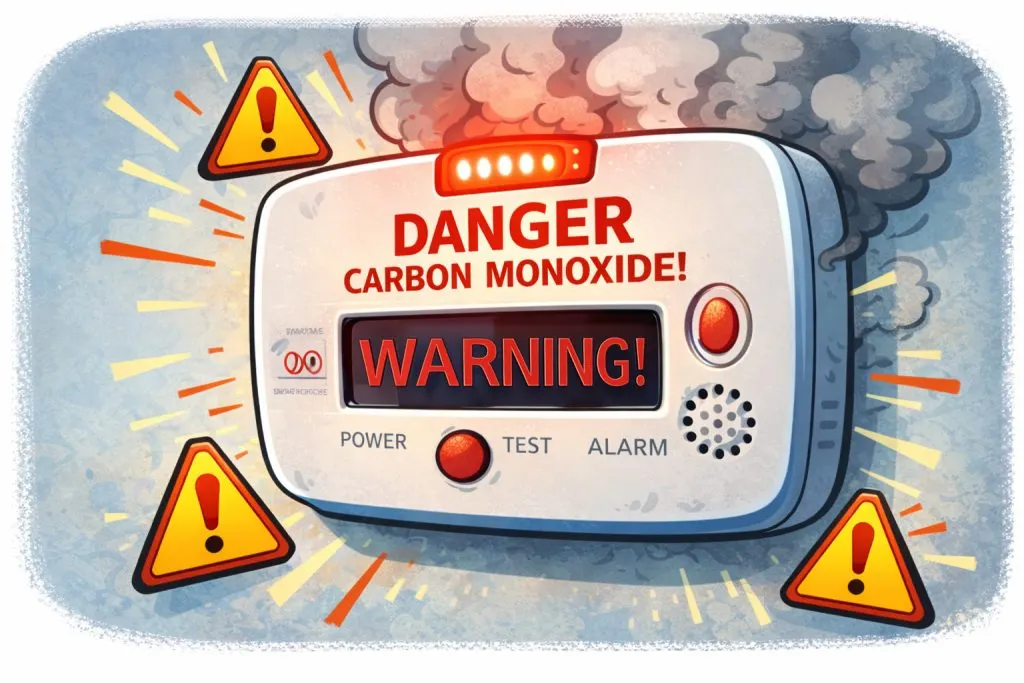
Your Carbon Monoxide Detector Goes Off
If your carbon monoxide detector sounds an alarm, treat it as an emergency. Get everyone out of the house immediately, call 911, and do not return until emergency responders have cleared the building. Carbon monoxide poisoning symptoms include headaches, dizziness, nausea, confusion, and flu-like symptoms that improve when you leave the house.
After the immediate danger has passed, contact Jonas Energy Solutions to inspect your heating system. Common sources of carbon monoxide include cracked heat exchangers, blocked vents, damaged flue pipes, and improperly adjusted burners. Our technicians will identify the source and make the necessary repairs to ensure your system operates safely.
Soot Buildup or Yellow Flame Color
If you notice black soot around your furnace or a yellow or orange flame where you should see blue, your system is not burning fuel efficiently. Incomplete combustion produces carbon monoxide, and these visual signs indicate your heating system poses a potential risk.
Schedule emergency service as soon as you notice these warning signs. A qualified technician will clean the burners, check the heat exchanger for cracks, and verify that your system is venting properly. These repairs protect your family and restore your system to safe, efficient operation.
3. Complete System Failure in Cold Weather
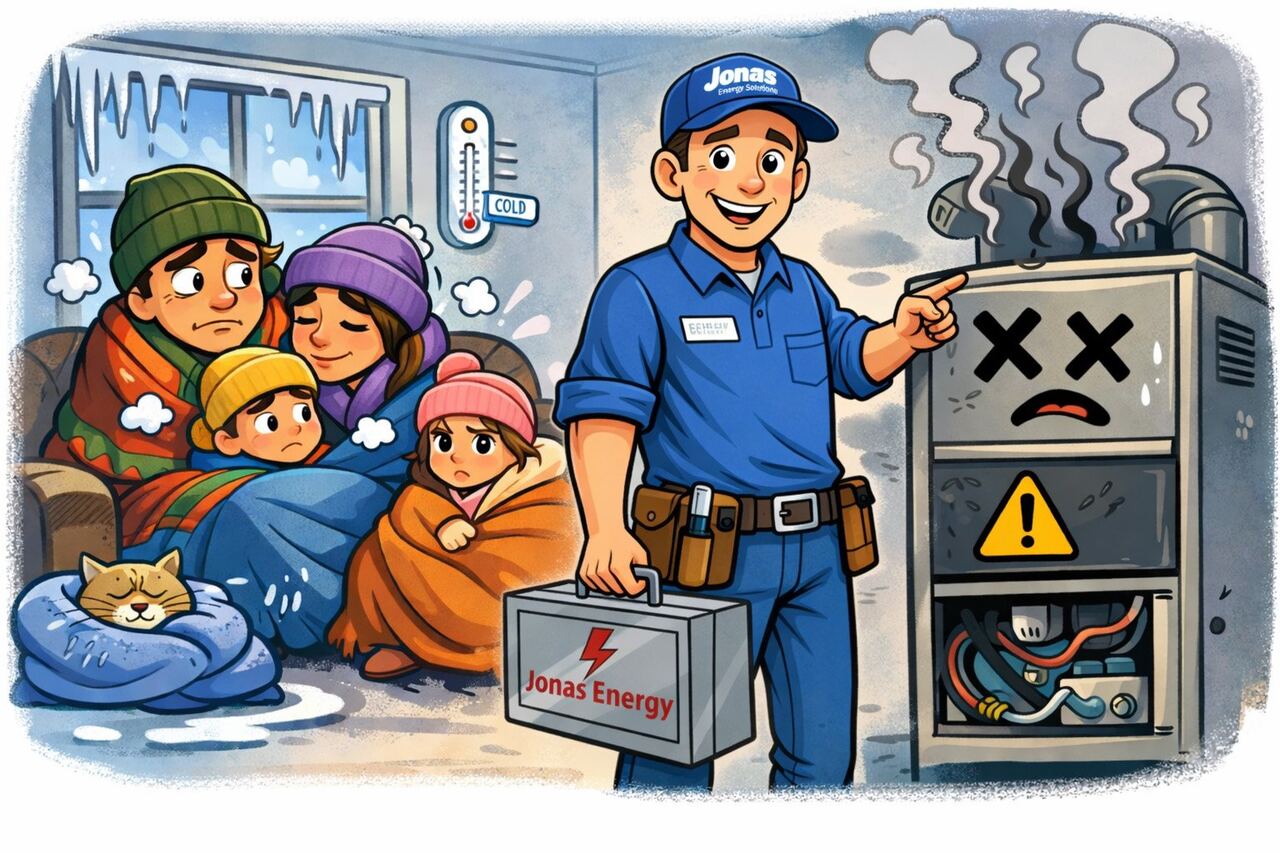
When your heating system stops working on a cold night, it’s more than an inconvenience. Extended exposure to cold temperatures inside your home can cause pipes to freeze and burst, leading to thousands of dollars in water damage. It also creates unsafe conditions for children, elderly family members, and anyone with health conditions that make them vulnerable to cold.
If your system won’t start or shuts off repeatedly, check your thermostat settings and circuit breaker first. Make sure the thermostat is set to heat mode and the temperature setting is higher than the current room temperature. Check that the furnace switch, which often looks like a light switch near the unit, is in the on position.
If these basic checks don’t solve the problem, call for emergency service. Common causes of complete system failure include failed igniters, tripped safety controls, blower motor problems, and electrical issues. These repairs require professional diagnosis and service, and attempting DIY fixes can make the problem worse or create safety hazards.
Jonas Energy Solutions provides 24/7 emergency heating repair throughout Lake County. When you call, we’ll dispatch a technician who can diagnose the problem and get your heat working again, even in the middle of the night or on holidays.
4. Pilot Light Problems and Ignition Failures
Older furnaces use a standing pilot light that burns continuously. Newer systems use electronic ignition, which lights the burners only when heat is needed. Both systems can develop problems that require immediate attention.
Pilot Light Won’t Stay Lit
If your pilot light goes out repeatedly, the thermocouple may need replacement. The thermocouple is a safety device that shuts off gas flow if the pilot light goes out. A faulty thermocouple may close the gas valve even when the pilot is lit, or it may fail to shut off gas flow when the pilot goes out, creating a dangerous situation.
Other causes include drafts, a dirty pilot orifice, or gas pressure problems. While you can relight the pilot following manufacturer instructions, a pilot that won’t stay lit requires professional service. Don’t attempt to bypass safety controls or keep relighting the pilot repeatedly without addressing the underlying cause.
Electronic Ignition System Failures
Systems with electronic ignition may click repeatedly without lighting, or they may show error codes on the control board. These symptoms indicate problems with the igniter, flame sensor, gas valve, or control board itself.
Modern furnaces include multiple safety controls that prevent operation when something isn’t working correctly. If your system won’t ignite, these controls are doing their job by preventing unsafe operation. A qualified technician can diagnose which component has failed and make the necessary repairs to restore safe operation.
5. Loud Banging, Screeching, or Grinding Noises
Heating systems make some noise during normal operation. You’ll hear the blower start, the whoosh of gas igniting, and air moving through ducts. But loud, sudden, or unusual sounds indicate mechanical problems that can lead to system failure or safety hazards if not addressed quickly.
Loud Banging When the System Starts
A loud boom when your furnace lights can indicate delayed ignition, where gas builds up before igniting all at once. This creates a small explosion inside the combustion chamber that can crack the heat exchanger, damage other components, and pose a safety risk.
Delayed ignition usually results from dirty burners, a failing igniter, or gas pressure problems. Turn off your system and call for emergency service. Continuing to operate a furnace with delayed ignition will cause progressive damage and increase the risk of a serious malfunction.
Screeching or Grinding From the Blower
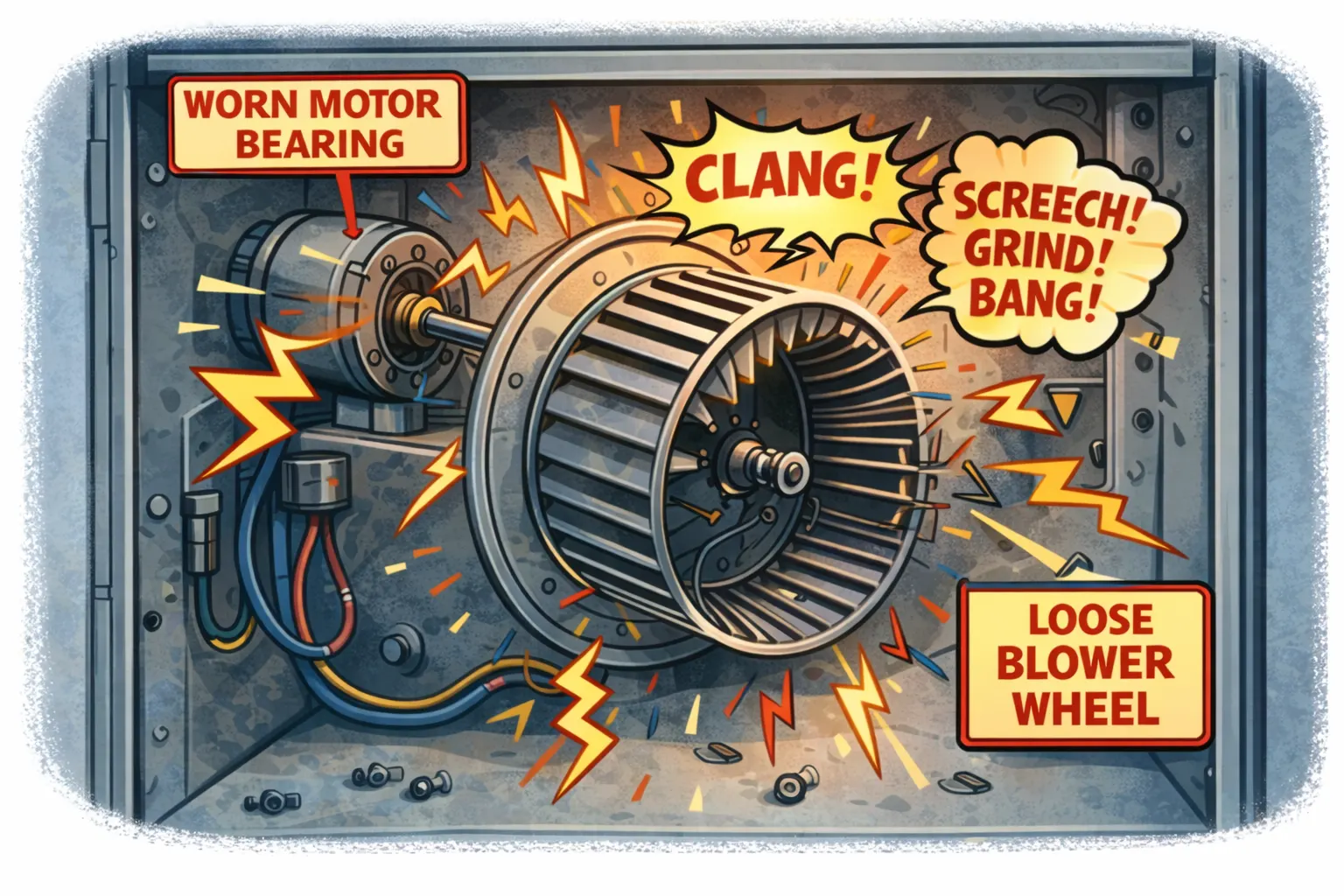
High-pitched screeching or metal-on-metal grinding sounds from the blower area indicate worn bearings, a failing motor, or a loose blower wheel. These components spin at high speeds, and when they fail, they can cause extensive damage to the blower assembly and other parts of your system.
If you hear these sounds, turn off your furnace and call for service. A blower motor that seizes while running can trip circuit breakers, overheat, or cause electrical damage. Catching these problems early, before complete failure, usually results in less expensive repairs and prevents secondary damage to other components.
When to Call for Emergency Service
Not every heating problem requires an emergency call, but the five warning signs covered in this article do. If you notice gas smells, carbon monoxide detector alarms, complete system failure during cold weather, persistent pilot light problems, or loud mechanical noises, don’t wait for business hours or try to fix the problem yourself.
Jonas Energy Solutions has served Lake County homeowners for generations. Our technicians know the unique challenges of heating systems in this area, from older homes with original equipment to newer construction with modern high-efficiency systems. We stock commonly needed parts on our service vehicles, which means we can often complete repairs during the first visit.
When you give us a call, you’ll speak with a real person who can assess your situation and dispatch a qualified technician. We provide upfront pricing, no sales pressure, and empathetic service that puts your family’s comfort and safety first.
Prevention Through Maintenance
Many heating emergencies can be prevented through annual maintenance. A comprehensive tune-up includes cleaning burners and flame sensors, testing safety controls, checking the heat exchanger for cracks, lubricating moving parts, and verifying that your system operates safely and efficiently.
Regular maintenance catches small problems before they become emergencies. It also keeps your system running at peak efficiency, which lowers your energy bills and extends equipment life. Jonas Energy Solutions offers maintenance plans that include priority scheduling, discounts on repairs, and annual tune-ups performed before heating season begins.
Don’t Wait Until It’s Too Late
Heating emergencies rarely happen at convenient times. They happen on the coldest night of the year, on weekends, and during holidays. That’s why Jonas Energy Solutions provides true 24/7 emergency service throughout Lake County.
If you’re experiencing any of the warning signs covered in this article, don’t wait. Call Jonas Energy Solutions at (707) 994-5911. Our experienced technicians will respond quickly, diagnose the problem accurately, and restore your heat safely. We’ve been protecting Lake County families for decades, and we’re here whenever you need us.