November's first hard cold snap hits foothill homes in Lake County and El Dorado County fast. You turn the heat on, the furnace fires up, runs for a few minutes, then shuts off, and the house stays cold. If you're searching for answers to a furnace not working the way it should, this post is for the specific symptom of furnace short cycling: starts, runs briefly, stops. Total failure and a heater blowing cold air are different problems covered in other posts. We'll point you there if that fits your situation better. For the on/off cycling problem, a handful of safe homeowner checks can rule out the simple causes, and a short list of stop-and-call triggers tells you when to step back and let a licensed technician take over.
Why a Furnace Starts, Runs, Then Shuts Off
A furnace that keeps shutting off after a few minutes is usually responding to one of three things: restricted airflow, a thermostat setting problem, or a safety control that cuts the cycle to protect the equipment. Some causes are simple homeowner checks. Others involve gas, ignition, or flame parts that only a licensed technician should touch. Work through the easy items first, and stop the moment you spot any of the warning signs described later in this post.
Worth noting before you start: this post covers only the furnace turns off after a few minutes symptom. Furnace won't start at all? Running but only blowing cold air? Those situations are addressed in our post What to Do When Your Heater Breaks Down at Night and our heater blowing cold air post. You can also browse our heating service guides for both topics. The four safe checks below are the right starting point for the cycling problem specifically.
Start With the Thermostat and the Filter
Work through these four checks in order. They're safe, require no tools beyond a replacement filter, and they address the most common reasons a furnace short cycles.
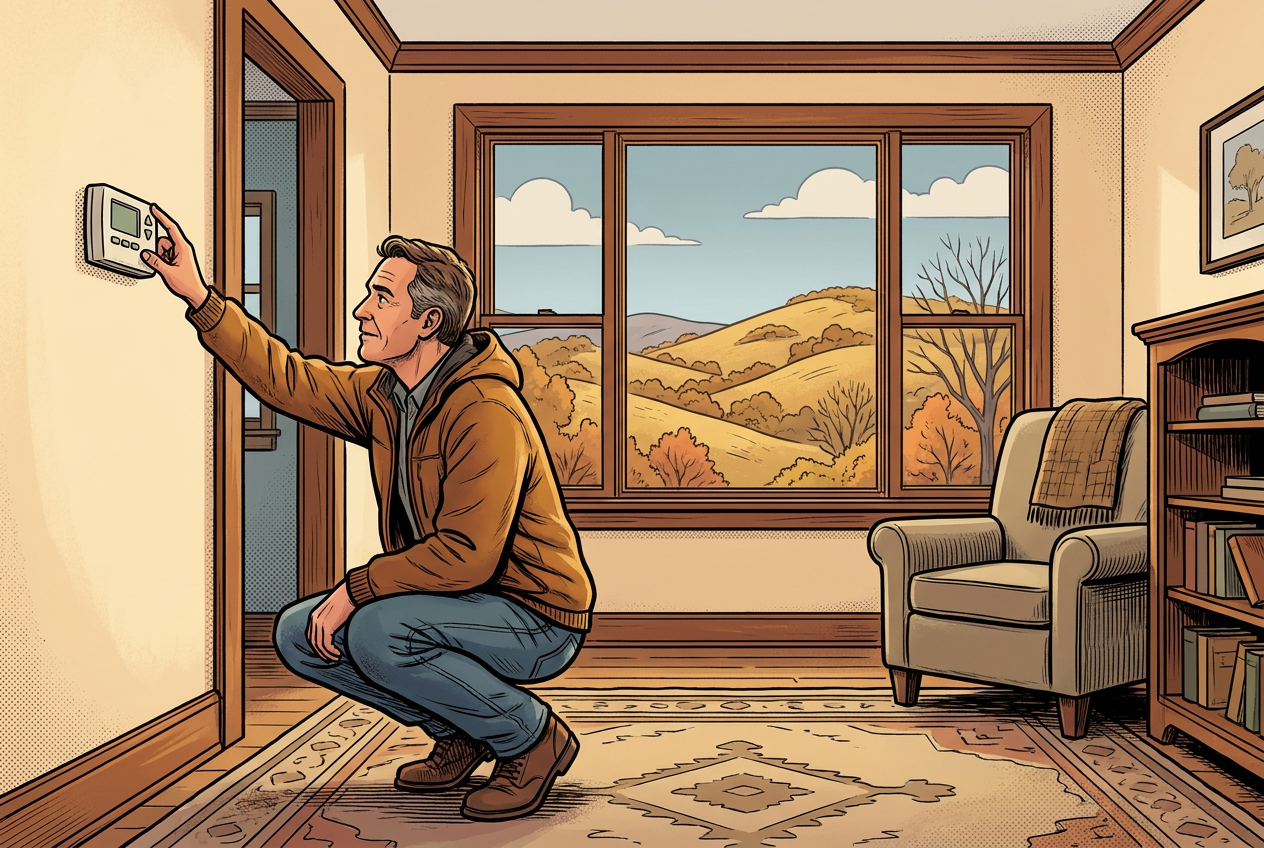
- Check the thermostat: mode set to Heat, set point above current room temperature, and fresh batteries if your model uses them.
- Check and replace the air filter if it's dirty. Turn the thermostat to Off first.
- Inspect every supply vent and return grille in the home and clear any obstructions.
- Reset a tripped circuit breaker once, then watch the next heating cycle carefully.
Thermostat Mode, Settings, and Batteries
It sounds basic. But the thermostat is the right first stop, and it catches more problems than you'd expect. Confirm the mode is set to Heat, not Cool or Fan Only. Set the target temperature at least two or three degrees above whatever the room currently reads. The furnace needs a clear call to run. If your thermostat takes batteries, swap them for fresh ones even if the screen looks fine. A weak battery can cause erratic behavior that mimics a much bigger problem.
Once settings look correct, give the furnace a few minutes to respond. Full cycle? The thermostat was the culprit. Still shutting off early? Move to the filter.
Check and Replace a Dirty Filter
A clogged air filter is one of the most common reasons a furnace short cycles. When airflow is restricted, heat builds up inside the unit faster than it should, and a safety control shuts the system down before it overheats. Turn the thermostat to Off before you pull the filter. Slide it out, hold it up to a light source, and if you can't see light through it, replace it with a new filter of the same size and MERV rating. Slide the new filter in with the airflow arrow pointing toward the furnace, close the access panel securely, and then restore the thermostat setting.

Blocked supply vents and return grilles are one of the most common reasons a furnace short-cycles. Clearing them takes only a few minutes.
Clear Vents and Returns, Then Try One Breaker Reset
Supply Vents and Return Grilles
Walk every room and check that supply vents, the ones that blow warm air out, are open and unobstructed. Furniture legs sitting on top of floor vents, rugs draped over grilles, drapes hanging in front of wall registers: all of these restrict airflow enough to cause short cycling. Return grilles, the larger grilles that pull air back into the system, need the same attention. Pull the couch forward, roll back the rug edge, and give the return a clear path.
Closing off vents in unused rooms is a common habit. It can actually make the problem worse by increasing pressure and reducing the airflow the system needs to run correctly. Open them back up while you're troubleshooting.
One Breaker Reset, and Only One
If the furnace isn't responding at all after the thermostat and filter checks, go to the electrical panel and look for the furnace breaker. A tripped breaker sits in a middle position between On and Off. Switch it fully to Off, then back to On, once. Go back and watch the next full heating cycle. If the breaker trips again, stop. Resetting it a second time doesn't fix anything. A breaker that trips repeatedly is telling you something is wrong electrically, and continuing to reset it can create a safety hazard. That's a call-the-technician situation.
Stop and Call Triggers You Should Never Ignore
Some conditions go beyond a homeowner check. If you encounter any of the following, stop what you're doing and call for help. Do not open furnace panels, touch gas components, attempt to light a pilot manually, or try to bypass any safety control.
- Gas smell: Leave the home immediately, do not operate any switches or appliances, and call your gas utility or 911 from outside.
- A very hot furnace cabinet: If the outside of the furnace feels extremely hot to the touch, the system may be overheating in a way that a filter change won't fix.
- Repeated breaker trips: One reset is the limit. A breaker that trips again points to an electrical fault that needs a licensed technician.
- Anything involving ignition or flame parts: Flame sensors, igniters, heat exchangers, and gas valves are not homeowner-serviceable items. Do not attempt to inspect or clean them.
Gas Smell and a Very Hot Furnace Cabinet
A gas smell is a gas emergency. Leave the home without stopping to grab belongings, and don't flip any light switches on the way out. Call your gas utility's emergency line or 911 from a neighbor's home or from the street. This is not a furnace troubleshooting situation. It's a safety situation, and it needs to be treated as one.
A furnace cabinet that's hot enough to be uncomfortable to touch briefly is a different kind of warning. Restricted airflow is one possible cause, but if you've already replaced the filter and cleared the vents, the problem is likely something the equipment's own safety controls are actively trying to manage. Let them do their job and call a technician.
Repeated Breaker Trips and Anything Involving Ignition or Flame Parts
Repeated breaker trips mean the circuit is drawing more current than it should. The breaker is protecting the wiring by shutting down. Resetting it again doesn't fix the underlying problem. It just delays a professional diagnosis and can create real risk in the process.
Ignition components, flame sensors, and heat exchangers require specialized tools and training to inspect safely. If your furnace's short cycling seems tied to the ignition sequence, you hear it try to light, fail, then shut off, that's a technician call, not a homeowner fix. Jonas Energy Solutions offers heating repair service and 24/7 emergency availability for situations that can't wait until morning.

When you call, describe how long the furnace runs before shutting off, what checks you already tried, and any unusual smells or sounds. It helps the technician arrive prepared.
What to Tell the Technician When You Call
A prepared homeowner makes a technician's job easier and faster. When you call, have a few details ready.
Tell them roughly how long the furnace runs before it shuts off: ten seconds, two minutes, five minutes. Describe which checks you already completed and what you found. Mention any unusual smells, sounds like clicking or rumbling, or error codes on the thermostat display. Let them know the filter's condition: brand new, recently replaced, or unknown. That information helps the technician arrive with the right expectations and, where possible, the right parts.
Want to get ahead of other common issues before winter deepens? 11 Common HVAC Mistakes Before Winter is worth a read. It covers the habits that lead to avoidable service calls across the season. You can reach Jonas Energy Solutions at our contact page or by phone. Lake County customers can call (707) 994-5911 and El Dorado County customers can call (530) 621-0503.
Prevent the Next Cold Snap Shutdown with a Safety Checkup
Most of the conditions that cause furnace short cycling, a dirty filter, blocked airflow, worn ignition components, show up gradually. You won't necessarily notice them until the first cold night of the year, when you actually need the heat. A pre-season safety checkup catches them before that moment.
Jonas Energy Solutions offers a maintenance plan starting from $29 per month, with no long-term contract and the ability to cancel anytime. Members receive priority scheduling and a reduced trip and diagnostic fee of $69, compared to $149 for non-members. For homes in Lake and El Dorado Counties that depend on their heating system through cold, sometimes unpredictable winters, having a scheduled safety checkup on the calendar each fall is one of the simpler ways to avoid an emergency call. November's Residential Heating Readiness theme is a good reminder that the best time to find a problem is before it leaves you cold.
Why does my furnace turn off after only a few minutes of running?
A furnace that turns off after a few minutes is usually short cycling due to restricted airflow, a thermostat issue, or a safety control shutting the system down to prevent overheating. Start by checking your thermostat settings, replacing a dirty filter, and clearing blocked vents. If those checks don't resolve it, a licensed technician should inspect the system.
Is furnace short cycling dangerous?
Short cycling itself is a sign something needs attention, and some causes, like a gas smell, a very hot furnace cabinet, or a repeatedly tripping breaker, require you to stop and call a technician right away. Do not attempt to open furnace panels or touch gas or ignition components. For those warning signs, treat the situation as urgent and get professional help.
How often should I replace my furnace filter to prevent short cycling?
Filter replacement frequency depends on the filter type, household dust levels, and whether you have pets. As a general guideline, check your filter monthly during heavy use seasons and replace it when it looks visibly clogged. A clean filter is one of the easiest ways to help your furnace run full heating cycles without tripping a safety shutoff.
Can I reset my furnace breaker more than once if it keeps tripping?
No. Reset a tripped furnace breaker only once, then watch the next heating cycle. If the breaker trips again, do not reset it a second time. Repeated trips indicate an electrical fault that needs a licensed technician to diagnose safely.