
That first cold morning of the season has a way of arriving faster than anyone expects. Heating failures and tenant calls spike fast, and a repair that might have cost a few hundred dollars in September can turn into an emergency service call by November. A structured commercial HVAC fall checklist gives Lake County property managers a clear path to catch problems before temperatures drop into the 30s, before a tenant calls at 6 a.m., and before the busy-season scramble for technician availability begins.
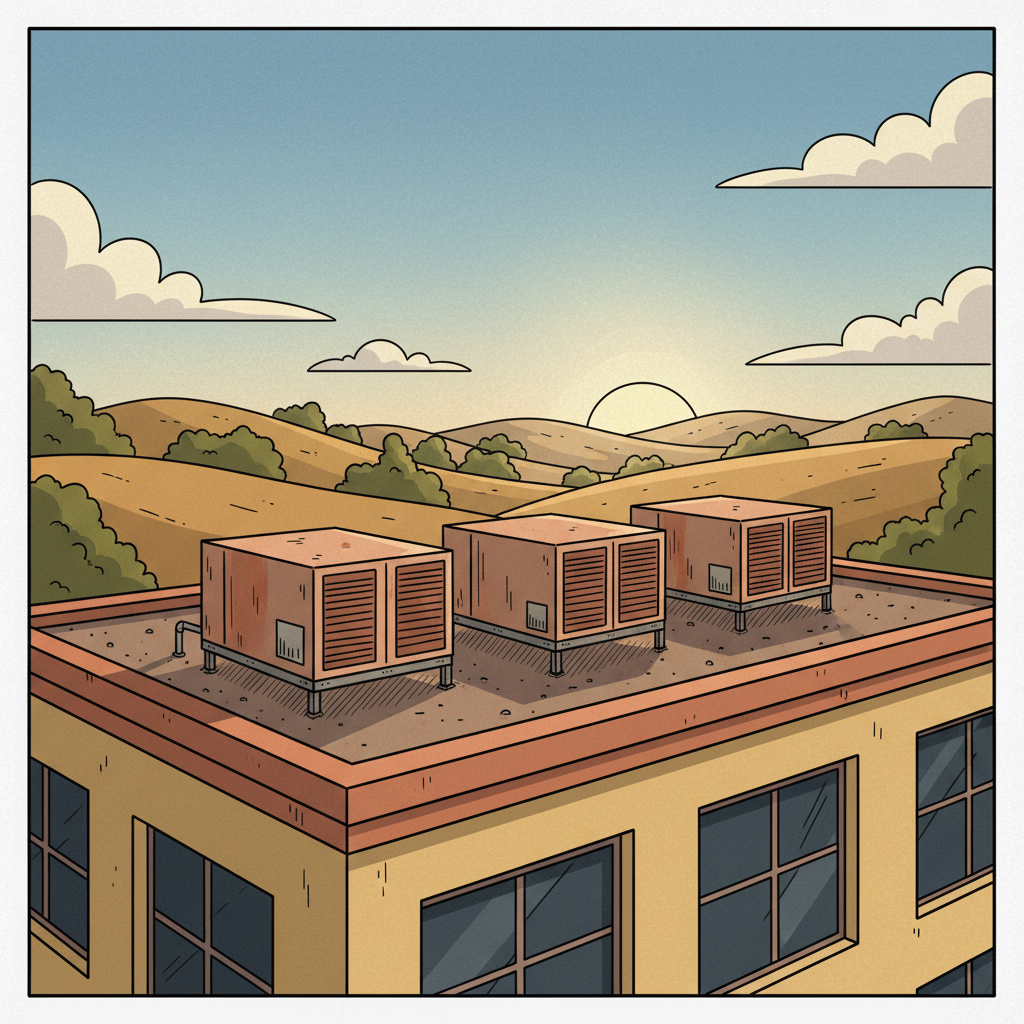
 Fall prep on rooftop units helps prevent first cold-morning failures.
What to Check Before Cold Weather Arrives
Five areas cover the majority of preventable heating failures in Lake County commercial buildings: thermostat schedules and setpoints, rooftop unit condition, filter inventory, unusual sounds or smells during the first heat cycle, and after-hours emergency procedures. Checking them in early fall, rather than after the first cold snap, gives you time to schedule repairs without competing for technician availability during peak season. Jonas Energy Solutions provides commercial HVAC services for Lake County buildings if you want a professional to walk through any of these items with you.
- Thermostats and controls: confirm heat mode, schedules, and setpoints before the first cold night.
- Rooftop units: visual checks by staff, full service by a licensed technician.
- Filters: verify correct sizes are on hand, log last change dates, and set a change schedule tied to occupancy.
- Unusual sounds and smells: log them early and act immediately on gas or burning odors.
- Backup and emergency procedures: current after-hours contacts, written outage communication plan, and spare parts inventory.
Safety note: Rooftop unit work beyond visual checks should be handled by a licensed HVAC technician. If anyone smells gas that resembles rotten eggs, evacuate the affected area and call the gas utility or 911 before returning.
Thermostats and Controls Set the Stage for the Whole Season
Controls are the cheapest failure point to fix. They're also the most common source of after-hours calls. A stuck schedule or wrong setpoint in a lobby or vacant suite can generate complaints from every tenant on that zone. The good news is that most control issues are staff-level fixes, and catching them in September or October costs nothing beyond a few minutes per zone.
What Your Staff Can Handle
Walk every thermostat in common areas and vacant units. Confirm the season is set to heat, occupied and unoccupied schedules match current building hours, and setpoints in vacant units are at a safe minimum rather than turned off. Replace low or dead batteries. Note any locked, cracked, or missing covers so they can be addressed on the same visit.
When to Call Your HVAC Technician
Some control work goes beyond what staff should attempt. Calibration checks and firmware updates on smart or networked controls, testing heat call from each thermostat to its corresponding unit, and reviewing building automation schedules and holiday overrides all require a licensed technician. A thermostat showing a call for heat with no response at the unit usually points to a control wiring, relay, or ignition issue. Treat it as a same-day call. Heating service and controls support for commercial buildings is one of the areas where getting a technician involved early pays off clearly.
 Verify schedules and setpoints on every zone before cold weather arrives.
Rooftop Units, Filters, and Indoor Air Quality
Rooftop units carry the heating load for most Lake County offices, retail centers, and mixed-use buildings. A missed fall inspection often turns into a weekend emergency call once temperatures drop. The split between staff-level tasks and technician tasks matters here more than anywhere else on this checklist.
Staff-Level Visual Checks
Clear leaves, nests, and debris from around each unit and condensate drains. Confirm access panels are secured and roof pathways are safe to walk. Look for obvious rust, sagging insulation, or oily residue near the cabinet. Verify disconnect switches at each unit are labeled and accessible. None of these tasks require tools or training, and all of them can flag problems before a technician even arrives on site.
Licensed Technician Tasks
Full rooftop unit maintenance covers the burner, heat exchanger, and ignition inspection, along with belt tension, bearing condition, and blower amperage checks. Gas pressure and combustion analysis on gas-fired units. Economizer damper operation and outdoor air setpoint verification. Ask your technician for a one-page condition report per RTU so you can budget replacements before a unit fails mid-winter. A commercial HVAC maintenance plan typically includes priority scheduling for after-hours calls, which matters when a unit goes down on a cold Friday night.
Dirty filters restrict airflow, shorten equipment life, and drive tenant complaints about stuffy or uneven spaces. The EPA's guidance on commercial indoor air quality and filtration identifies adequate filtration and ventilation as core elements of managing air quality in commercial buildings. Jonas Energy Solutions also offers indoor air quality services for commercial buildings if filtration alone isn't resolving air quality concerns.
Your staff can confirm on-site inventory of the correct filter sizes for every unit, log the last change date on each filter or filter rack, inspect visible filters for heavy dust, moisture, or collapse, and replace filters in high-traffic tenant spaces before heat runs full time. Keep at least one spare filter per unit on site so staff can swap one out during an after-hours complaint without waiting on a delivery. Your HVAC technician should recommend filter type and MERV rating for each unit, check static pressure to confirm the system is not overloaded, and adjust the change schedule based on occupancy and outdoor conditions.
Unusual Sounds and Smells Are Early Warning Signals Worth Acting On
The first heat cycle of the season often surfaces problems that were quiet all summer. Grinding, squealing, or banging noises and persistent burning or gas odors should be logged immediately and escalated to a licensed technician before they turn into emergency repairs or tenant safety incidents.
Walk each floor during the first full heat cycle and listen at vents and closets. Note unusual noises by location. Ask front-desk or on-site staff to report any burning, musty, or chemical odors. Confirm CO detectors in mechanical rooms and boiler rooms are within their service date. Catching these signals in the first week of heating season gives your technician time to diagnose and repair before a minor issue becomes a building-wide outage.
A burning smell that fades after the first short heat cycle is usually dust burning off heat exchangers. One that persists, or returns on subsequent cycles, needs a technician. A rotten-egg smell near any gas-fired unit is treated as a gas leak until proven otherwise. Evacuate the area and call the gas utility or 911 before letting staff or tenants back in.
Backup Plans and Emergency Procedures Protect Tenants When Outages Hit
Storms, wind events, and Public Safety Power Shutoffs can knock out heat in Lake County buildings with little warning. Clear procedures protect tenants, reduce liability, and shorten downtime. If your only emergency contact is a cell number for one person, you do not have an after-hours plan.
Building Your After-Hours Response Plan
Before the first storm of the season, confirm that your emergency HVAC contact list is posted at the front desk and in the maintenance office. Verify that after-hours service agreement details and response expectations are current. Put a written space heater policy for tenants in move-in packets and seasonal notices. Make sure your tenant communication plan for outages specifies a preferred channel and a backup contact. Stock spare filters, belts, and common parts so routine fixes do not require a parts run.
- Post updated emergency HVAC contacts at the front desk and maintenance office before October.
- Confirm your after-hours service agreement is active and that response expectations are documented.
- Send tenants a brief seasonal notice that includes your outage communication process and space heater policy.
When Backup Power Makes Sense for Commercial Properties
Some Lake County commercial properties have enough critical load, whether medical equipment, refrigerated inventory, or tenant lease requirements, that a generator or battery backup system makes practical sense. Your HVAC technician can provide guidance on backup power sizing during an annual review of your emergency response plan. Backup power and generator options for commercial buildings are worth evaluating if a single extended PSPS event would create significant tenant or operational risk.
Frequently Asked Questions
How often should commercial HVAC filters be changed?
Most commercial filters are changed every 1 to 3 months, depending on filter type, occupancy, and outdoor conditions. High-traffic retail, medical, or dusty environments often need more frequent changes. Your HVAC provider can set a schedule based on static pressure readings and actual system load.
When should fall commercial heating inspections be scheduled in Lake County?
Aim to complete rooftop unit maintenance and controls testing in early fall, before overnight lows regularly drop into the 30s in the Lake County foothills. Scheduling early gives you time to budget for any repairs before the first hard cold snap and avoids competing for technician availability during peak season.
What temperature should heat be set to in vacant units?
Vacant units are generally kept at a safe minimum setpoint rather than turned off, which helps protect finishes, plumbing, and equipment. Confirm the right setting with your HVAC provider and any lease or insurance requirements for your building.
What is the difference between staff-level HVAC checks and technician tasks?
Staff-level checks include visual inspections, thermostat setting verification, filter swaps, and debris clearing. Licensed technician tasks include combustion analysis, heat exchanger inspection, control calibration, gas pressure testing, and diagnosing any system that does not respond to a heat call. Mixing up these roles can create safety risks and void equipment warranties.